
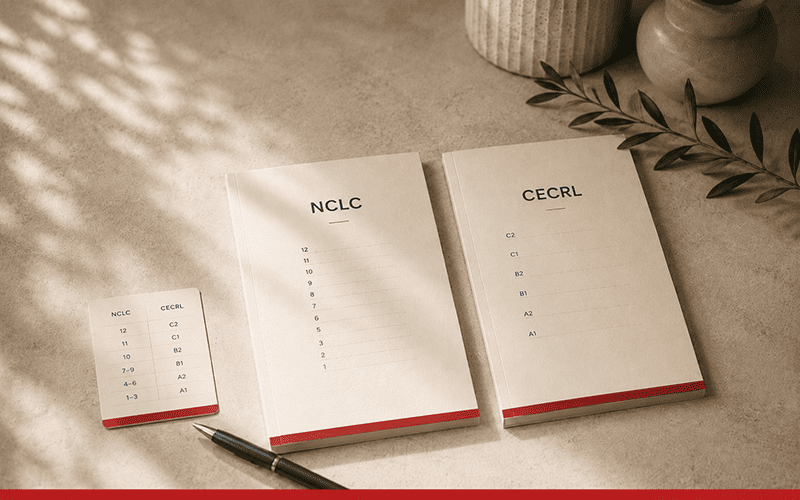
The CLB and the CEFR: two frameworks, two countries
The Canadian Language Benchmarks (CLB) are national standards used to describe, assess, and recognize French and English language skills in Canada. In this respect, they are similar to the CEFR levels, but with a few differences.
Similarities
Like the CEFR, the CLB serve as a framework and assessment scale for a candidate’s proficiency in a second language. They are therefore not tests, but scales used to analyze exam results and determine the candidate’s level—in other words, their proficiency in the language being tested.
For example, if you take the TEF Canada, you will receive a score that, thanks to the CLB scales, will tell you your level: beginner, intermediate, or advanced.
Differences
The CLB and the CEFR are independent and are not used in the same countries. The Common European Framework of Reference for Languages, as its name suggests, is used only in Europe. The CLB, on the other hand, are specific to Canada.
The two frameworks also use different assessment scales and level equivalencies, even though both aim to describe a candidate’s language skills in a standardized way.